

Spiral mesh belt are a type of conveyor belt commonly used in various industrial applications. These belts are made of polyester material, which is knitted or woven into a spiral pattern to form a mesh structure. The spiral mesh design allows the belt to have good flexibility and strength, while also providing good ventilation and drainage properties. Polyester spiral mesh belts are widely used in conveyor systems for handling various materials, such as food products, packaging materials, and other lightweight items. They are often used in industries like food processing, packaging, and logistics, where efficient material handling and transportation are crucial
Advantages of All Spiral Mesh Belt
Balanced Spiral mesh features a simple yet effective design, constructed from alternating left and right hand spiral coils. These coils are held in place by interconnecting crimp rods which run through the width of the belt. The edges of the belt can be supplied either welded or with a knuckled selvedge.
Balanced Spiral gains its excellent tracking properties by employing an alternating pattern which prevents the belt from pulling to one side. Lateral movement within the belt is reduced by the use of specially crimped rods which hold each spiral coil in place.
Balanced Spiral is most commonly supplied as friction-drive belt; however certain meshes can be supplied as Positive-Drive, allowing sprockets to engage with the belts mesh. Alternatively, we can supply Balanced Spiral with chain edges for high load applications.
Cross-Flights and Side Plates are available for inclined applications or product separation requirements. Also supplies Double Balanced Spiral belting, for applications with particularly high load and/or for products which require a narrower aperture than is possible with standard balanced spiral belts.
-

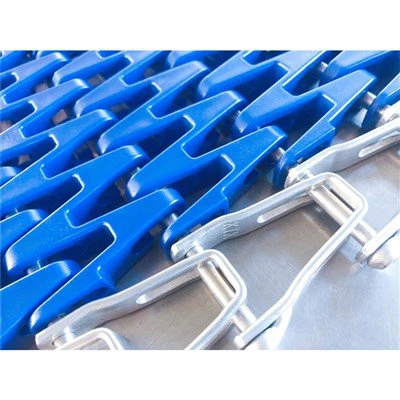
Features of Hybrid Spiral Mesh Belt: 1. Combine the advantage of stainless-steel mesh belt and plastic belt. 2. Easy assemble and easy disassemble plastic module. 3. The driven system is all the same
Add to Inquiry -
Features of Direct Drive Spiral Mesh Belt The header on both edge of the belt is longer than standard spiral belt and the header is integrated forming by the rod. It’s a kind of direct drive instead
Add to Inquiry -
Spiral Mesh Belt for Rows Link
Spiral Mesh Belt for Rows Link, SR type is a combination of spiral mesh,unique link and straight rod. Spiral Mesh Belt for Small Radius Four Rows Link, or Three, Five Rows Link is optional.
Add to Inquiry -
Spiral Mesh Belt For Small Radius Three Rows Link
Spiral Mesh Belt for Small Radius, SR type is a combination of spiral mesh,unique link and straight rod. Spiral Mesh Belt for Small Radius Three Rows Link is a typical structure, 4 or even 5 rows
Add to Inquiry -
Spiral Mesh Belt, LF2 type, is a combination of spiral mesh, unique link and straight rod.
Add to Inquiry -
Spiral Belt no mesh, LR, is a combination of especially developed link and straight rod.
Add to Inquiry -
Self-Stacking Spiral Mesh Belt
1. The whole system is driven by trail instead of drum.. 2. The belt is stacked layer by layer on itself.. 3. The cold airflow comes from the top of the tower and the airflow will be kept inside the
Add to Inquiry


Why Choose US
Our Factory
Kansai Wire Netting(Kunshan)Co., Ltd, as a subsidiary of Kansai Wire Netting from Japan, was founded in 2004, in Kunshan City, Jiangsu Province, PRC with total invested capital-USD 4.2 million co-operated by Kansai Wire Netting Co., Ltd(Japan) and JUN-EN Enterprise Corporation (Taiwan).
Our Product
Balanced Belt, Compound Balanced Belt, One Direction Belt, Chain Belt, Flat Wire Belt, Ladder Belt, Curve Conveyor Belt, Special Process Belt, Plywood veneer Dryer Belt.
Freezing Food Machinery, Canned Food Machinery, Sea Food Machinery, Continuous Baking Machinery, Heat Treatment Machinery, Glass Machinery, Chemical Machinery, General Purpose Conveyors, Special Conveyors.
Main Market
With nearly 100 years developing history, Kansai group has sales or manufacturing operations in Japan, Taiwan, China, Thailand, Singapore,Australia and USA.
After-sales Service
In the operation and normal maintenance of mesh belt, we can provide customers with a wide range of reliable basis and advice. As an industrial wire mesh manufacturing arm of the Nippon Filcon group, we will ensure to meet our new challenges by responding to each customer requirement with the Timely, Correctly and Honestly commitment we are renowned for.
Components of Spiral Conveyor Belt Range
Balanced Spiral Woven - An extremely popular mesh design metal conveyor belt, it is found in almost every manufacturing industry with a wide ranging number of applications. Balanced spiral mesh features a simple yet effective design, constructed from alternating left and right hand spiral coils held in place by interconnecting crimp rods. Its alternating pattern prevents the belt from pulling to one side, giving it excellent tracking properties.
Cordweave - This belt offers an extremely close and flat mesh for applications where small items are being conveyed. It provides a uniform heat transfer across the belt due to its high density and smooth carrying surface. These characteristics make it a popular choice in a wide variety of applications from biscuit baking to sorting small mechanical components.
Flat Spiral - These types of conveyor belts have small apertures alongside a flat conveying surface suitable for products prone to slipping through more open mesh designs. Spiral conveyor belts are often a preferred choice where tracking problems have been previously experienced, due to its alternating coil pattern helping to reduce any tendency for the belt to veer to one side.
Chain Link - A chain link belt is one of the simplest mesh belt designs, suitable for light duty use such as cooling and drying applications. Successive coils are interwoven to create an open mesh. By keeping the belt design simple yet functional, this spiral conveyor belt offers an economic and lightweight solution for low load conveying.

The stainless steel mesh belt can be used for the transportation of broken materials and the transportation of finished items. In addition to carrying out pure material transportation, it can also be matched with the requirements of the technological process in the production process of various industrial enterprises to form a rhythmic assembly line. Therefore, metal mesh belts are widely used in various modern industrial enterprises. It is an indispensable important accessory in various industries' automatic devices and modern automatic assembly lines.
Wire stringing process: After a section of it is wound and formed, we then weave and string it according to the actual requirements of the customer, and finally connect all the knotted stainless steel mesh belts together. The service life of ordinary mesh belts is very short compared to stainless steel mesh belts, because our use environment is very complicated, such as high temperature, corrosion and other environments. As we all know, stainless steel mesh belts are characterized by high temperature resistance, corrosion resistance and high strength. Edge treatment process: When the stainless steel mesh belt is wound in series and formed into a semi-product of stainless steel mesh belt, the edges of its series must be treated later.
Generally, the suitable use forms: welding, back bending, screw welding , Add chains, chain plates, chain pieces, etc.
What Do You Call Mesh Belt Material
The material used to make a mesh belt is generally referred to as wire mesh or mesh fabric.The specific type of wire mesh used for a mesh belt can vary depending on the application and the properties required for the belt.
For example,some mesh belts may require a fine mesh with small openings,while others may need a larger mesh with wider openings.Stainless steel is a common material used for wire mesh due to its strength,durability,and resistance to corrosion.
Carbon steel wire mesh is also commonly used for mesh belts,as it is strong and cost-effective.Other materials,such as aluminum,copper,or brass,may be used for specialized applications.
The choice of material for the mesh belt will depend on the specific requirements of the application,such as temperature range,chemical resistance,and load-bearing capacity.
Mesh belt material is a flexible material consisting of interlocking metal wires or synthetic fibres in a mesh-like structure. It is commonly used in industrial environments for a variety of applications including conveyor belts, filtration systems and heat treatment processes.
The materials used for mesh belts can vary depending on the intended use of the belt. Metal mesh belts are usually made from stainless steel or other corrosion resistant metals, while synthetic mesh belts can be made from materials such as polyester, nylon or polypropylene.
Metal mesh belts are often used in high temperature applications where strength and durability are important. They can withstand extreme temperatures, as well as heavy loads and abrasive materials. Metal mesh belts are also corrosion resistant and can be used in wet or corrosive environments.
On the other hand, synthetic mesh belts are often used in applications where cleanability and flexibility are important. They are lightweight and easy to clean, making them ideal for use in food processing and other industries with high hygiene requirements. Synthetic mesh belts are also flexible, allowing them to conform to the shape of the items being conveyed on the belt.
Mesh belt materials are often woven or braided together using a variety of techniques, including plain, twill and Dutch weaving. These techniques produce different patterns and densities of mesh that can be tailored to the specific needs of the application.
In addition to conveyor belts and filtration systems, mesh belt materials are also used in other applications such as oven belts, freezer belts and drying belts. In these applications, the mesh structure of the material allows for good air flow and heat transfer, making them ideal for use in heating and cooling processes.
The first thing you need to do is be sure the conveyor belts are installed correctly. The single or the double loop edges of your belt should be curved back, away from the way it will be traveling. The smooth side should always be facing upwards. If your belts are installed incorrectly it can cause accidents and cause a lapse in production time due to the conveyor belts becoming damaged.
You also want to watch for contact between the support strips and the z-bends. If the joints located on the underside of your conveyor belt rub or come into any contact with the support strips this can lead to extra wear and fatigue failure.
The drive socket teeth of the conveyor belts need to be aligned perfectly. This way, they will all be pulling together smoothly. If they don’t pull smoothly then this can cause certain wire strands to experience stress overload.
The transfer or reverse bend ratio being too small can cause added stress to the z-bends. This will cause the z-bend joints to end up creating their own groove into the transfer support.

Precautions for Using Spiral Mesh Belt
Do Keep Hair, Body Parts & Clothing Clear of the Conveyor
Whether it's long hair, body parts or loose clothing, anything that is not properly restrained can get caught in a conveyor belt, potentially causing serious injuries. One of the key conveyor safety rules you should implement is that anyone working near a conveyor should make sure their hair is tied back and jewelry, like rings, necklaces, watches and bracelets, should be removed. Also, employees working near conveyors should watch their appendages and avoid wearing baggy clothing.
Don't Climb or Stand on the Conveyor at Any Time
Workers should never stand, sit, climb or walk on the conveyor belt. Safety is of the utmost importance, and these actions are extremely dangerous (even if they look fun). Conveyor belts were not designed for people to walk or climb on them. There are many pinch points in any conveyor system that can catch people or clothing, risking serious injuries — even when conveyor pinch point guards have been installed. Besides the risk of injury, people riding on conveyors can cause the belts to un-track, damaging the whole system.
Do Keep Personnel Away From the Conveyor Before Starting
Government regulations require conveyor systems to be equipped with a warning signal that can be sounded prior to start-up. That should be just the beginning for companies that are establishing conveyor safety rules out of concern for their workers. Employees should be trained on what the warning signal means and the possible dangers that can occur if it is ignored.
Don't Take Off Conveyor Guards or Move Safety Divides
Employees or contractors can remove guards for maintenance, exposing machinery, chains, gears and moving parts that can be dangerous. To keep workers safe, make sure automated conveyor systems are locked when in service and only return to operating equipment after all conveyor pinch point guards and covers have been successfully reinstalled.
Do Know Where the Stop/Start Controls Are and How to Use Them
Any employees who work with conveyor belts should be aware of where to find the emergency stop and start controls for the system. That way, in the event of any emergencies or other problems, employees will be prepared to handle the situation appropriately.
Don't Ignore Issues
Employees who work on automated conveyor systems should know that if there are any issues, they should notify a supervisor immediately. Employees should be trained that if you see something, say something. No matter how minor the issue may seem, it's always better to be safe than sorry.
Do Make Conveyor Belt Safety Training a Priority
If your business involves conveyors, all employees should be well-versed in the safe use of conveyor belts before they start working. In addition, existing employees should receive regular refresher training on conveyor safety rules, and all visitors should be made aware of how to stay safe while they are in your facility.
Don't Mistreat Controls
Only trained employees should use conveyor controls. It's important that you regularly monitor your conveyor controls to make sure no one has misused, modified or disconnected them. Train your employees to understand that the conveyor belt controls are not to be modified without authorization and they are part of a larger system.
Seven Preventative Maintenance Checklist Tips for Spiral Belts
Check belt tension / Overdrive. Overdrive can change overtime as the belt stretches, ensuring the overdrive is checked routinely—the least costly means to ensure you operate at the lowest possible tensions resulting in the maximum belt life.
Rag the rails, rag the rails, rag the rails! Ragging the rails is an inexpensive and easy way to keep your rails clean and the tensions low.
Monitor take-up height (indication of tension). When the belt tension increases, excess belt will be deposited into the take-up loop—monitoring the take-up position is a quick and easy way to get a feel for how tight the belt is operating.
Physically check all bearings. All too often, accessing bearings can be a challenge. Many processors have turned to remotely using grease lines. However, remote grease lines can freeze as condensation develops preventing grease from getting to the bearings. Make time to physically inspect bearings is an easy method to tell if bearings are functioning correctly that can save you money in the long run.
Inspect and correct all belt support wear-strip connections. Just as the belt, the support wear strips can elongate over time, the connections then become stressed or cause catch points for the belt. Frequent inspections can ensure no development of an unexpected snag point for the belt, which could tear-off wear strips leading to metal-on-metal contact.
Inspect cage bar caps throughout, but more intensely at the top and bottom tier. Cage bar caps will wear over time, most commonly in the highest tension areas of the system. Inspecting the cage bar caps to ensure they are not worn through helps avoid metal-to-metal contact with the belt.
Visual inspections are critical to identifying system issues, but do not ignore what the system is telling you. Listen for unfamiliar or new sounds. Be aware of new smells which could signal electrical or lubricant issues. Vibration transfers through structure so using your hands may help discover a drive or belting issue. Learn the rhythm of your system and look for changes.
FAQ
Q: What are the specifications of wire mesh belts?
Q: Why are conveyor belts important?
Q: How strong is wire mesh?
Q: How to do maintenance on conveyor belt?
Lubricate roller bearings.
Scrape parts of the conveyor mechanism to remove debris and foreign objects.
Check for damages to conveyor belt and rollers.
Check whether materials are unloading properly from the conveyor mechanism.
Q: What are the preventive maintenance check points of conveyors?
Q: What are the failures of conveyor belts?
Q: How can I improve my conveyor belt?
Q: How long do conveyor belts last?
Q: How to increase conveyor belt life?
a stable, rigid supporting structure that withstands the forces acting upon it.
pulleys and conveyor belt idlers fitted at right angles to the belt-running axis.
belt-contact components cleaned regularly and protected from material build-up.
Q: How often do conveyor belts need to be replaced?
We're well-known as one of the leading all spiral mesh belt manufacturers and suppliers in China. If you're going to buy high quality all spiral mesh belt for sale, welcome to get quotation from our factory. Also, customized service is available.
