

Flat Wire Conveyor Belts are robust high strength open style flat strip belting connected with a straight rod. The open style creates great air flow and drainage. These belts are easy to clean. Available in various materials and openings - most notably 1/2×1/2, 1/2×1 and 1×1 specifications and either standard or heavy duty with clinched or welded selvage. Typical applications include fertilizer, breading, cleaning, drying, packaging, baking, freezing and transferring conveyors.
Advantages of Flat Wire Belt
Durability: One of the primary advantages of metal conveyor belts is their unmatched durability. Unlike plastic belts that can wear out quickly under heavy loads or high temperatures, metal belts withstand rigorous usage, ensuring longevity and cost-effectiveness for businesses. Ease of repair is not to be underestimated either.
Hygiene & Sanitation: Metal conveyor belts are inherently more hygienic than their plastic counterparts. They are non-porous and resistant to bacteria, making them easy to clean and sterilise. In an industry where food safety is paramount, metal belts provide an unparalleled level of sanitation. These belts also help to contain operation expenses with ease of sanitation and environmental impact by using less chemicals and water for sanitation.
Temperature Resistance: Metal conveyor belts can withstand extreme temperature variations without compromising their structural integrity. This property is vital in food processing, where products often need to be heated, cooled or even frozen during different stages of production. Delicious cookies, comforting biscuits, fried chicken, nuggets, frozen pizzas or even frozen vegetables wouldn't be possible without them.
Customisation: Metal conveyor belts offer a high level of customisation. They can be tailored to specific dimensions and designs, allowing manufacturers to optimise their production processes. This adaptability ensures seamless integration into various food processing equipment. In the age of mass customisation, they are the first choice when it comes to catering to all shapes and sizes.
Strength & Load Capacity: Metal conveyor belts possess exceptional tensile strength and load-carrying capacity. They can efficiently handle heavy loads without sagging or stretching, ensuring smooth and reliable operations even under intense pressure.
Environmentally Friendly: Stainless steel, the primary material used in metal conveyor belts, is recyclable and eco-friendly. By choosing metal belts, companies contribute to sustainable practices and reduce their environmental footprint. Not to mention, they always have residual value as stainless steel is recyclable, meaning that they can be sold off at the end of their life, as opposed to plastic which you will be charged for in order to take it off site.
-

Curve Flat Wire Belt is arranged in the form of lattice and jointed with the straight rods. The edge can be button head welded or clinched.
Add to Inquiry -
Flat Wire Belt with Clinched Edge
Flat Wire Belt with Clinched Edge is arranged in the form of lattice and jointed with the straight rods.
Add to Inquiry -
Flat Wire Belt with Welded Edge
Flat Wire Belt with Welded Edge is arranged in the form of lattice and jointed with the straight rods.
Add to Inquiry


Why Choose US
Our Factory
Kansai Wire Netting(Kunshan)Co., Ltd, as a subsidiary of Kansai Wire Netting from Japan, was founded in 2004, in Kunshan City, Jiangsu Province, PRC with total invested capital-USD 4.2 million co-operated by Kansai Wire Netting Co., Ltd(Japan) and JUN-EN Enterprise Corporation (Taiwan).
Our Product
Balanced Belt, Compound Balanced Belt, One Direction Belt, Chain Belt, Flat Wire Belt, Ladder Belt, Curve Conveyor Belt, Special Process Belt, Plywood veneer Dryer Belt.
Freezing Food Machinery, Canned Food Machinery, Sea Food Machinery, Continuous Baking Machinery, Heat Treatment Machinery, Glass Machinery, Chemical Machinery, General Purpose Conveyors, Special Conveyors.
Main Market
With nearly 100 years developing history, Kansai group has sales or manufacturing operations in Japan, Taiwan, China, Thailand, Singapore,Australia and USA.
After-sales Service
In the operation and normal maintenance of mesh belt, we can provide customers with a wide range of reliable basis and advice. As an industrial wire mesh manufacturing arm of the Nippon Filcon group, we will ensure to meet our new challenges by responding to each customer requirement with the Timely, Correctly and Honestly commitment we are renowned for.

Production of Flat Wire Belt materials are mainly carbon steel, galvanized iron wire, spring steel wire, corrosion and high temperature resistant stainless steel materials (304, 310, 310S, 314, 316, 316L, 430, etc.) A3 low carbon stainless steel, 45 # stainless steel, 1Cr13 heat-resistant stainless steel, stainless steel, 304 stainless steel, 1Cr18Ni9Ti stainless steel, 0 Cr18Ni14NO2CU2 heat-resistant and acid-resistant stainless steel. Products are widely used in: glass bottles and jars, food, light cannon, metal, utensils, chemical fiber, electronics, powder metallurgy, heat treatment and other industries automatic devices and automatic assembly line use; natural gas, coke oven gas and electronic infrared transmission of various kiln systems such as the use of food machinery, glass machinery, conveying machinery, etc.
How to Install a Flat Wire Belt
The final part of our flat wire belt guide covers how to install a flat wire belt as well as essential belt conveyor alignment procedures.
Wire belt installation
The first thing to address before learning how to install a flat wire belt is whether you are replacing an existing wire belt, or installing a new one on an empty system. In wire belt replacements, the old wire belt is typically used to pull the new one into place.
If the system doesn't have an existing wire belt to help guide the new one into place, the recommended method is to run a cable along the intended wire belt path. The wire belt is then pulled into position using the proper tools, such as a sized winder.
During installation, it's essential that the fastening method between the new wire belt and the old wire belt, or the new wire belt and the cable, is strong enough to overcome three main obstacles:
Frictional forces of the wire belt against idlers and pulleys.
Gravitational forces of any elevation changes.
Inertia forces that are involved in the start of the pull.
It is recommended that before any installations begin, a line-pull calculation is done to ensure that the equipment being used is suitable for the process.
Methods of pulling the wire belt will also vary depending on its weight and length. The most common methods are to either use a winder or a winch. Once installation begins, the winder or winch will reel the cable or old wire belt, feeding the wire belt onto the conveyor system at a controlled speed.
Wire belt tracking
Wire belt conveyor alignment procedures are necessary to guarantee your new wire belt continues to run smoothly. A poorly tracking wire belt can cause a variety of short and long-term problems for an operation. This is why proper tracking is the best way to ensure runs efficiently and for a long time.
First, survey the equipment for proper alignment and establish reference points and benchmarks. Doing this makes it easier for you to spot-check in the future.
Next, replace the return rollers with indexed adjustable rollers (located towards the drive end). These additional tracking rollers help keep the wire belt straight on the return rollers, allowing for finer adjustment of the tracking system.
We recommend establishing a formal tracking procedure that assigns the responsibility for a specific wire belt to a single individual. This ensures that fewer mistakes are made and communication is efficient.
Choosing The Best Conveyor Belt Material
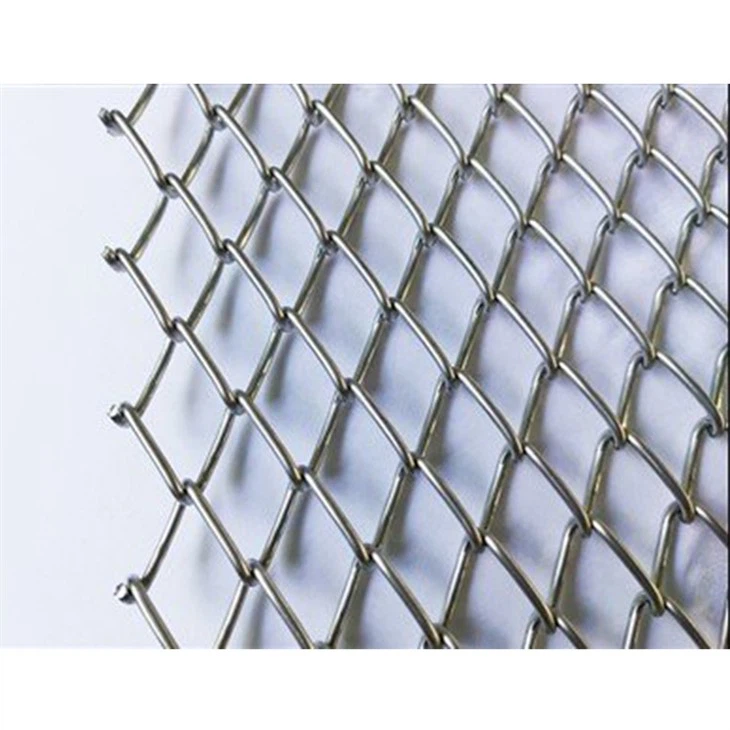

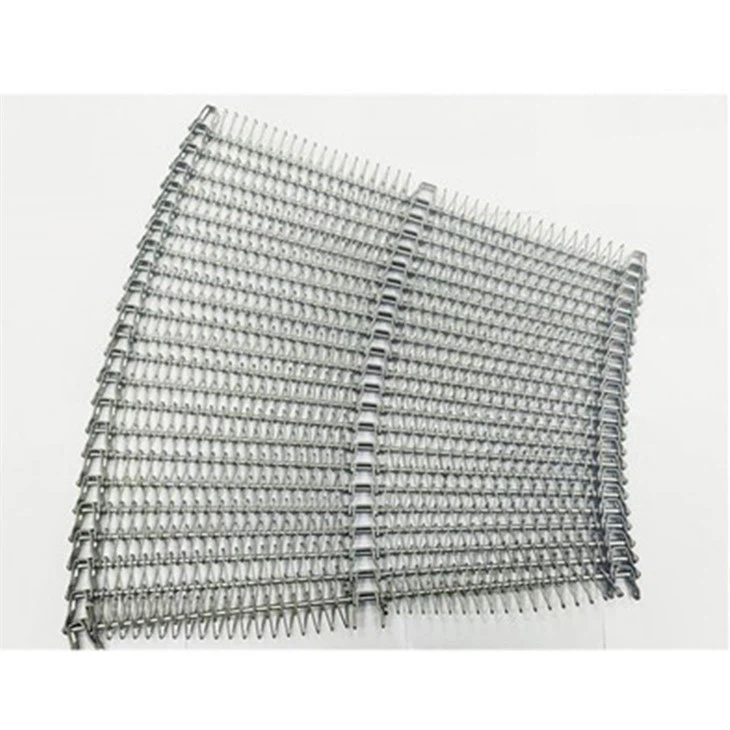

In the food packaging and handling industry, the most effective way of reducing the risk of contaminating packaged food products is using a conveyor belt that resists bacterial growth and withstands caustic washdowns.
Since the outcome of the products being conveyed depends on what the belt is fabricated with, many businesses select wire mesh as their material of choice.
Hygiene
Hygiene and food go hand in hand, which is why the material of conveyor belts for material handling and food packaging is crucial.
The open structure of wire mesh belts allows for easy cleaning and prevents the accumulation of debris or bacteria. This is especially important in food handling where cleanliness is a priority.
Ventilation & Drainage
Another advantage of using wire mesh belts is their ability to facilitate airflow and drainage. The mesh design is beneficial for processes that involve washing, cooling, or heating, which are all important in the production and handling of food products.
Durability
Wire mesh belts are typically made from stainless steel and other durable metals which are corrosion-resistant and can withstand high temperatures, and heavy loads.
Oftentimes in this industry, food is conveyed at varying temperature ranges during different stages of processing and handling.
An example of this is transporting products through a shrink-wrapping process. This process involves a shrink-wrap conveyor belt that encases products in a plastic film. Once the film is on, heat is applied to shrink the film tightly around the items, creating a secure and protective covering.
Shrink wrap conveyor belts need to be able to withstand high temperatures without warping or degrading, like wire mesh or specialized heat-treated materials.
Unlike plastic conveyor belts, wire mesh belts also have properties that give them the ability to operate in extreme temperatures without producing any toxicity when reacting with foods.
Customization & Versatility
Conveyor belts for material handling and food packaging need to be suited for a variety of products from baked goods to fresh produce.
Fortunately, wire mesh belts can be tailored to specific applications like different sizes of openings or specialized coatings, making them the most versatile option. For example, close and narrow linking is helpful for food products smaller in size.
Non-Slip Surface & Smooth Product Transport
When handling any kind of materials, it's important that the products themselves don't get disfigured or harmed while they are being conveyed.
Many wire mesh belts have a smooth, non-slip surface that keeps products in place and minimizes friction, reducing the risk of damage during transport.
Precision & Consistency
One of the reasons businesses use conveyor belts for material handling and the food packaging industry is because they ensure production runs swiftly and efficiently. However, in order for this to happen the belts must be consistent.
Wire mesh belts offer constant, precise movements, allowing for accurate positioning of products during packaging and handling processes.
Maintenance
Finally, wire mesh belts often incur lower maintenance compared to other types of belts. These belts are easier to clean and sanitize, which is important in any industry where contamination control is essential. In addition, they are less likely to fail or break prematurely, meaning they have a longer belt life.
The reduced time it takes to clean wire mesh conveyor belts after production also results in less water use, chemical use, and wastewater that needs to be treated.
Wire mesh conveyor belts stand out as an ideal choice for both material handling and food packaging due to their versatile characteristics.
Their customizable designs and resistance to corrosion make them adept at handling an assortment of materials, from heavy loads to delicate products, and their open structure enables efficient airflow, easy cleaning, and compliance with strict hygiene standards.
Flat Wire Belt Application Industry
Flat wire belt products are widely used in the glass products industry, such as annealing furnace mesh belt, baking furnace mesh belt. Food processing industry, dehydrated vegetables, quick-frozen food single freezer pre-treatment mesh belt, chain link mesh. Powder metallurgy, stainless steel heat treatment, quenching, sintering, brazing, roasting, bright, blackening, bearing, carburizing high temperature furnace mesh belt, baffle type mesh belt, coating drying line conveying mesh belt, foam nickel reduction production line mesh belt, cleaning machine, elevator, dryer, dryer, curing oven mesh belt. Each conveying process chain mesh and mesh belt.
Flat wire type mesh belt is made of rolled flat wire. It is connected with curved shaft type threading strip, so that the position of each spiral coil strip can be correctly positioned, thus minimizing the deformation and extension of the mesh belt. Its workmanship is fine, the surface is flat, the two sides are parallel, and the material is excellent and durable. This belt has the advantages of good air permeability, uniform tension, fine workmanship, flexible rotation, good smoothness, high temperature resistance, pressure resistance, corrosion resistance, long life, etc.
Flat wire belt is made of stainless steel wire. It is a high-performance, multi-purpose product. Because of its excellent performance, it is widely used in paper making, food, environmental protection, printing and dyeing, clothing, chemical industry, glass, medicine, electronics, insulation, grinding wheel slicing, machinery and other fields.
Five Ways to Improve Your Conveyor Belt's Lifespan
Is Your Belt Joined Correctly?
A good belt join can drastically increase the life of your belt, as well as reducing downtime in the future. There are a variety of different options available to ensure your belt join gives you extra belt life including joining tubes, used to create a hybrid join between a full strand weave, joining clips, ideal for minor report to a belt and EZ-Splice belt strands, which give the strongest belt join and reduces repair time.
Are You Maintaining Your Belt Regularly?
A common cause of short belt life is poor maintenance. To be able to maximise the lifetime of your conveyor belt, it is imperative that it is cleaned and maintained as best as possible. This will improve performance, as well as reducing downtime. The open mesh design of belting provides maximum flow through of cleaning and sanitising agents making it ideal to clean in place rather than removing the belt during routine cleaning schedules.
We recommend handling the belt gently when cleaning it, try to avoid bending or pulling on individual wire strands. Avoid forcing cleaning rods and brushes under the belt surface. If you do happen to bend or distort a strand whilst cleaning, straighten it immediately with needle nose pliers, or the Wire Belt straightening tool.
Is Drive Component Performance Being Maximised?
These components also need to be in the proper position and have the proper clearance from the belt joints or z-form, they should never make contact with any conveyor component. Vibrations from the conveyor can often trigger the set screws to loosen in the sprockets causing them to move across the shaft resulting in belt failure. Additionally, you only need to use enough tension on the belt to engage the drive sprockets. Too much tension will cause additional wear.
Ensure You Are Using The Correct Belt For Your Application
Products and processes change over the years. The conveyor belt that was designed or fitted for a specific product and process several years ago may no longer be appropriate or heavy duty enough for the demands of the current application. The impact of product loading and belt speed on belt life needs to be re-evaluated on an on-going basis.
Check Your Conveyor Transfer End Arrangement
To facilitate transfer of product to and from other machinery, rollers may be used at each end of the conveyor. Rotating end rolls are preferred because belt wear is less.
Grooved end rolls or free turning transfer rollers should be used where possible to ensure positive tracking and minimise wear at the belt joints. Smaller rollers should be braced or supported to prevent deflection.
Blank type end rollers may use one or two pairs or sprockets along with blanks to assist the roller in turning and to provide belt alignment. Belts wider than 1200mm should use extra sprockets in the centre. Any extra sprockets added should be evenly distributed across the width of the belt.
Make sure the transfer diameter is appropriate for the belt mesh being used. Each mesh requires a specific transfer diameter, if a transfer is too small for the mesh used, it will cause premature belt failure.
FAQ
Q: What is a wire mesh conveyor belt used for?
Q: What is the purpose of a wire mesh?
Q: How strong is wire mesh?
Q: How much weight can wire mesh support?
Q: Which wire mesh is best?
Q: What are the features of wire mesh?
Q: What are the advantages of wire mesh?
Q: Is wire mesh as strong as rebar?
Q: Is wire mesh durable?
Q: What is the lifespan of wire mesh?
We're well-known as one of the leading flat wire belt manufacturers and suppliers in China. If you're going to buy high quality flat wire belt for sale, welcome to get quotation from our factory. Also, customized service is available.
