

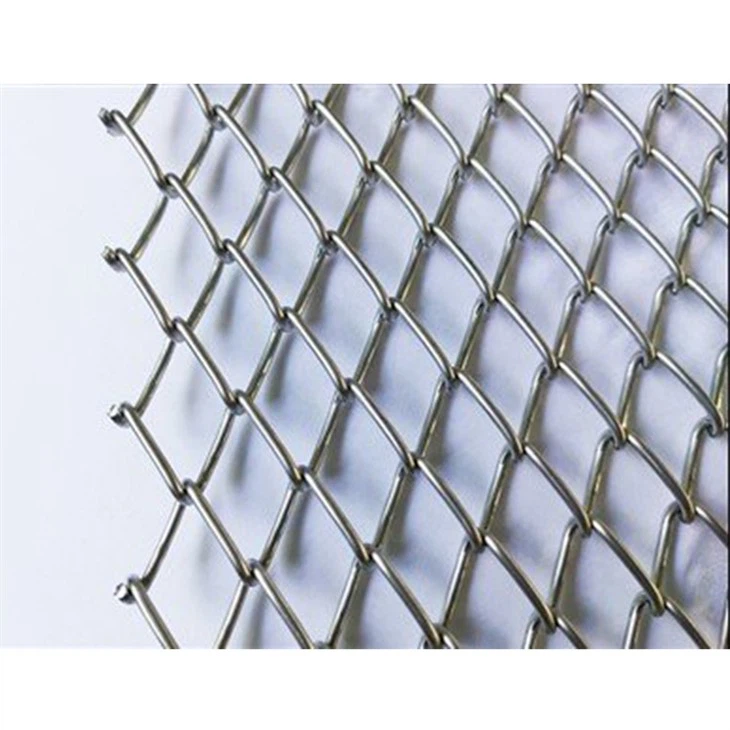
An eyelink conveyor belt is composed of calibrated eyelinks, plate links and cross rods. Eyelinks are wire elements produced with great precision, whose far ends are eye-shaped, which explains the name. By assembling the eyes on to cross rods a hinge construction is created. Plate links transfer the load to underlying support sections, and are installed in rows at a regular distance.
Advantages of What is Eyelink Belt
Flexibility
As the name suggests, our eyelink belt has great flexibility which makes it possible for use in a wide array of applications. Its excellent flexibility means the belt can negotiate transfer shafts as small as a pencil.
Eyelink belt is manufactured in stainless steel 1.4310 (302) or music wire. There are also other specialty materials available on request as well as ptfe coating. So that your belts can be suited to their specific applications, more than 60 different pitch and wire combinations are available. You can read here for more information on eyelink belt applications.
Open design
Another advantage of our eyelink belt is their open design. The many different pitch sizes we offer means an open area of up to 86%, this makes it a great choice where circulation of liquids, dry coatings, air or gas is important around products on the move.
The open design allows a wide variety of products to be conveyed hygienically. In addition, the low belt mass helps your business contain costs and maximise efficiency.
-

Eyelink Belt with chain is driven by chain. Wires are formed into eye-links and joint with rods. Mesh opening is increased by inserting collars or by shot welding.
Add to Inquiry -
Eyelink Belt with Reinforced Rod
Eyelink Belt with Reinforced Rod is a kind of popular conveyor belts. Wires are formed into eye-links and joint with rods. Mesh opening is increased by inserting collars or by shot welding.
Add to Inquiry


Why Choose US
Our Factory
Kansai Wire Netting(Kunshan)Co., Ltd, as a subsidiary of Kansai Wire Netting from Japan, was founded in 2004, in Kunshan City, Jiangsu Province, PRC with total invested capital-USD 4.2 million co-operated by Kansai Wire Netting Co., Ltd(Japan) and JUN-EN Enterprise Corporation (Taiwan).
Our Product
Balanced Belt, Compound Balanced Belt, One Direction Belt, Chain Belt, Flat Wire Belt, Ladder Belt, Curve Conveyor Belt, Special Process Belt, Plywood veneer Dryer Belt.
Freezing Food Machinery, Canned Food Machinery, Sea Food Machinery, Continuous Baking Machinery, Heat Treatment Machinery, Glass Machinery, Chemical Machinery, General Purpose Conveyors, Special Conveyors.
Main Market
With nearly 100 years developing history, Kansai group has sales or manufacturing operations in Japan, Taiwan, China, Thailand, Singapore,Australia and USA.
After-sales Service
In the operation and normal maintenance of mesh belt, we can provide customers with a wide range of reliable basis and advice. As an industrial wire mesh manufacturing arm of the Nippon Filcon group, we will ensure to meet our new challenges by responding to each customer requirement with the Timely, Correctly and Honestly commitment we are renowned for.
Flat Surface Heavy-Duty Modular Eye Link Conveyor Belts for Either Industrial or Food Processing Applications
Eye link conveyor belts as known as Eye-Flex conveyor belts. The design of eye link conveyor belts typically involves a series of interconnected eye links or eye link modules. When these modules are joined with cross rods, they create a flat and robust surface. These belts are commonly made of stainless steel or other alloys.
Eye Link Conveyor Belts are utilized in various industries, including industrial and food processing applications, owing to their stability, durability, high strength, and versatility.
The customization options and adaptability of Eye Link Conveyor Belts make them well-suited for harsh applications that demand an extremely heavy-duty belt.
|
Available Material |
Carbon Steel, SS 304, SS 316, other materials available upon request |
|
Chain pitch |
25.4 mm, 31.75 mm, 38.1 mm, 50.8 mm, 63.5 mm, 76.2 mm |
|
Cross Rod diameter |
5 mm, 6 mm, 7 mm, 8 mm, 10 mm, 12 mm |
|
Eye Link Wire diameter |
1.5 mm, 1.6 mm, 1.8 mm, 2 mm, 2.5 mm, 3 mm, 3.5 mm |
|
Spiral pitch |
2.4 mm to 100 mm |
|
Cross Rod pitch |
25.4 mm, 31.75 mm, 38.1 mm, 50.8 mm, 63.5 mm, 76.2 mm |
|
Belt width |
100 mm to 6,000 mm |
|
Maximum Temperature |
Up to 400 °C |
Methods of Drive
Eye Link Conveyor Belts can be driven through various mechanisms, each tailored to specific applications
Sprockets Drive
- Generally, Eye Link conveyor belts are driven directly on the eyelinks using specially developed drive sprockets.
- Sprockets are typically placed at both sides and under each row of plate links.
- The width, number of teeth, and material of the sprockets are determined based on usage conditions.
- Sprockets are available in materials such as steel, stainless steel 304 and 316, PA6, and POM, with customization options.
Cage Rollers Drive
- Broad and heavily loaded eyelink conveyor belts are preferably driven by cage rollers across the width of the belt.
- Cage rollers drive the eyelinks regularly, promoting a longer belt lifespan and even wear.
Disc Rollers Drive
- Preferred in situations where there is a risk of filth or ice accumulation.
- Disc rollers with discs, arranged in multiples of the cross pitch, offer different driving functions:
* Drive on the cross rod
* Drive on the cross rod with a ‘lifting function,' lifting products for discharge.
Tube Rollers Drive
- With replaceable strips, plastic, or soft-metal strips in the grooves limit deflection and allow for replaceable drive components.
- With replaceable teeth are advantageous for long, broad, and heavily loaded belts, offering a reversible roller for extended strip and teeth life cycles.
Chain Sprockets Drive
- Eyelink belts can incorporate chains, especially in applications with negative bends, such as freezing or blanching.
- Chain sprockets replace side-sprockets in these applications.
- Belting recommends sprockets with at least 12 teeth to minimize the polygon effect on belt run.
- The necessary number of teeth depends on factors like belt width, length, load, and running speed.
Application of Eyelink Belt in the Prepared Vegetable Industry
Eyelink belt are widely used in the prepared vegetable industry due to their durability, flexibility, and suitability for various applications. Here are some specific applications of eyelink belt in the prepared vegetable industry
Conveying: Wire mesh belts are commonly used for conveying prepared vegetables through different processing stages such as washing, cutting, blanching, and drying. The open mesh design allows for efficient drainage during washing and facilitates air circulation during drying, ensuring proper handling of the vegetables throughout the production line.
Blanching: In blanching processes, where vegetables are briefly immersed in hot water to deactivate enzymes and preserve color, wire mesh belts provide a stable and even surface for the vegetables to pass through the blanching tanks. The flexibility of the wire mesh belt allows it to conform to the shape of the blanching equipment, ensuring uniform blanching of the vegetables.
Drying: After washing or blanching, vegetables need to be dried before further processing or packaging. Stainless steel wire mesh belts are used in drying ovens or processes where hot air is circulated to remove excess moisture from the vegetables. The open mesh design promotes efficient airflow, resulting in uniform drying of the vegetables.
Freezing: Wire mesh belts are also utilized in freezing processes, where prepared vegetables are passed through blast freezers or tunnel freezers to freeze them quickly. The sturdy construction of stainless steel wire mesh belts allows them to withstand low temperatures without deformation, ensuring smooth and efficient operation in freezing applications.
Sorting and grading: Stainless steel wire mesh belts are employed in sorting and grading processes where prepared vegetables are sorted based on size, shape, or quality. The open mesh design allows for easy visual inspection and sorting of the vegetables as they pass along the conveyor.
Packaging: In packaging lines, wire mesh belts are used to transfer prepared vegetables into packaging containers or trays. The smooth surface of the wire mesh belt ensures gentle handling of the vegetables, preventing damage or bruising during packaging.
Belt Support of Eyelink Belt


Generally two configurations are possible to provide eyelink belts with support: longitudinal support or herringbone support.
Longitudinal support for eyelink belts
The longitudinal support consists of support sections fitted in the longitudinal direction of the installation. These sections are placed at both sides and depending on the width and the load, about every 300 mm right across the width of the belt. At the height of those support sections, rows of plate links must be fixed, which will convey the load to the underlying support sections. Depending on the load these rows will consists of one or more plates.
Herringbone support for eyelink belts
In a herringbone support structure the support sections are positioned in the form of a fish bone. In this case it will be sufficient to place rows of plate links at the edges only. The bearing function will be taken over by the eyelinks. As all eyelink hit the support strips some time or other, the wearing pattern will be equally spread across the full width of the belt. With this support the product will be equally processed across the full width of the belt. Possible shadow zones, as is the case in longitudinal support structures, will not occur here.
If hygine is even a more important issue than usual, we advise you to provide the belt with plate links at the edges only. Because of their round shape eyelinks are easier to clean than plate links. In such a construction the frame will be constructed with a herringbone support, so that filth falling through the belt will immediately be pushed away from the support strips.
Support return path
The return path only carries the weight of the belt. This is why a lighter support structure is sufficient here. In the longitudinal construction one of two profiles can be left out. The herringbone support can be executed in a less compact form. In the return path, the first 500 mm of the belt slacken. There is no support in order to make the formation of a sag possible. The formation of a sag will prevent the belt from climbing on to the drive. It is also necessary in order to prevent the belt from being pushed instead of pulled through the return path. At both ends the support sections should be slightly bent down, in order to establish a gradually guidance of the belt on to and off the profiles.
Rollers can also serve as a support to restrict the frictional coeffecient. The rollers must be at right angles to the frame, parallel to each other and level. The distance between the rollers is irregular, in order to prevent an irregular run.
Frictional coefficient
Below you will find an indication of the frictional coefficient for the different alternatives:
value of 0,20 - 0,25 with plastic strips, if high-quality
value of 0,70 with metal strips, the hardness of the strips should be higher than that of the plate links. In this case we advise the use of spring steel material
value of 0,10 in case of rollers supported on bearings, only in the return path and for belts provided with plates with wearing course on top
Precautions When Buying Eyelink Belt
In many vegetable and fruit manufacturing industries, production line manufacturing is a very good choice. It can not only save labor costs and capital investment, but also increase productivity and generate more profit for the boss. Before processing fresh fruits and vegetables, the first thing to do is to clean and disinfect them.
Only in that way can people ensure the safety of food and environmental sanitation. In the past, manual cleaning was not complete and wasted time, so most of it was improved. Because cleaning equipment or green machines operate in water for a long time, it is necessary to use eyelink belt raw materials to avoid corrosion of 304 raw materials. Although the cost increases, the quality is very good and it is not easy to rust.
There are a variety of eyelink belt, which can be divided into chain mesh belts, drive chain conveyor belts, crankshaft conveyor belts, sigmoid conveyor belts, space symbol conveyor belts, horseshoe chains (great wall mesh belts), glasses mesh belts, etc. The actual specifications and models are determined based on the number of goods delivered by the customer, such as mesh holes, total width, thickness, wire diameter, etc. Some information harms the price.
How to Prevent Eyelink Belt from Rusting in Use and Application
Eyelink belt are widely used in various industries for their exceptional strength, durability, and resistance to high temperatures. However, one common issue that many users face is the risk of rusting, which can compromise the performance and longevity of the belt.
Understanding the causes of rusting
Before delving into prevention methods, it's essential to understand why eyelink belt may rust. Rust formation is primarily triggered by exposure to moisture, oxygen, and corrosive chemicals. Additionally, scratches or surface damage can provide entry points for rust to develop. Understanding these causes allows us to implement targeted preventive measures.
Proper cleaning and maintenance
Regular cleaning and maintenance are crucial to preventing rust on eyelink belt. Clean the belts with a mild detergent and warm water, followed by thorough rinsing and drying. Avoid using harsh chemicals or abrasive cleaning agents as they may damage the protective surface layer of the stainless steel.
Apply protective coatings
One effective way to protect eyelink belt from rust is to apply protective coatings. There are various coating options available, such as polymer-based coatings, which act as a barrier between the metal and external elements. These coatings prevent direct contact with moisture and corrosive substances.
Control the operating environment
Limiting the exposure of eyelink belt to harsh environmental conditions can significantly reduce the risk of rusting. If possible, store or operate the belts in a controlled environment with stable temperature and humidity levels. Implementing this measure can extend the life of the belts and minimize rust-related issues.
Regular inspections
Frequent inspections of the metal mesh belts are essential to identify any signs of rust or damage early on. Conduct visual inspections and tactile checks to detect any irregularities in the surface. Timely detection allows for prompt action, preventing further rust development.
Lubrication
Proper lubrication is vital for maintaining eyelink belt smooth operation and preventing friction-related rust. Use lubricants specifically designed for stainless steel applications. Lubrication not only reduces the risk of rust but also extends the belt's lifespan.
Addressing scratches and surface damage
Even minor scratches or surface damage can lead to rust formation, as they expose the underlying metal to the elements. Address any scratches promptly by using appropriate repair kits or consulting with professionals experienced in stainless steel belt maintenance.
Rust removal techniques
If rust does appear on the eyelink belt, it's crucial to address it immediately to prevent further spread. Several rust removal techniques, such as mechanical methods or chemical rust removers, can effectively restore the belt's surface.
FAQ
Q: What is a mesh belt used for?
Q: What is the purpose of metal mesh?
Q: Is metal mesh good?
Q: What is a wire mesh conveyor belt used for?
Q: What are the specifications of wire mesh belts?
Q: What is the purpose of a wire mesh?
Q: What is mesh belt?
Q: How strong is wire mesh?
Q: Which wire mesh is best?
Q: How much weight can wire mesh support?
We're well-known as one of the leading eyelink belt manufacturers and suppliers in China. If you're going to buy high quality eyelink belt for sale, welcome to get quotation from our factory. Also, customized service is available.
