

A stainless steel conveyor is a conveying system designed to handle raw and finished products at all stages - from processing through to packaging. we provide stainless steel conveyor systems in a selection of styles and sizes and are confident we can supply a suitable solution for your facilities. Though we can't speak for all manufacturers, our conveyor belts are fabricated in food-grade stainless steel, a material that can resist extreme temperatures and wear and tear.
Advantages of Stainless Steel Conveyor Belt
Preserves Food Flavor
When the belt comes into contact with food, the sulfur can be released and contaminate the food product, changing its flavor. Stainless steel does not outgas, making it an excellent choice for conveying food products that are sensitive to flavor changes.
Resistance to High Temperatures
In many food processing applications, conveyors need to be able to withstand extreme temperatures. For example, when meat is cooked, it needs to be transported quickly to the cooling area to prevent bacteria from growing.
If the conveyor is not heat-resistant, it can be subject to degradation, which can lead to contamination. Stainless steel conveyors can withstand high temperatures, making them ideal for use in food processing facilities where cooked food is transported.
Resistance to Low Temperatures as Well
Of course, not all food needs to be cooked. Some foods, such as frozen fruits and vegetables, must be kept at low temperatures. If a conveyor is not resistant to low temperatures, it can break down, leading to costly repairs. If your facility specializes in frozen food, stainless steel conveyors are a good option, as they can withstand low temperatures without breaking down.
Easy to Clean and Sanitize
Another important consideration in the food industry is cleanliness. Conveyors in food processing plants must be easy to clean and sanitize to prevent the spread of bacteria and ensure food safety.
Stainless steel is the material of choice because it can withstand harsh cleaning agents and high temperatures. Due to the strict sanitation requirements in the industry, conveyors are often exposed to high-pressure water jets and steam. Other materials, such as rubber and plastic, can degrade over time when continually exposed to these and other cleaning agents.
-

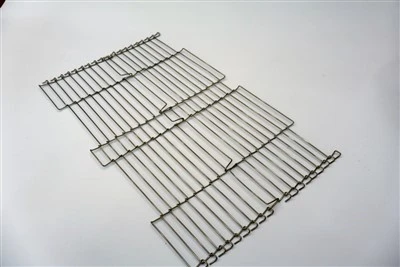
Ladder Belt-new Connection Solution
Ladder belt-new connection solution Ladder belt is a common used belt on frying machine in food industry, there are some disadvantages of the connection by sleeve : 1,The shatter of product could
Add to Inquiry -
Stainless Steel Conveyor With Flange
The stainless steel conveyor belt is a crucial component in various industries, including food industrial, pharmaceutical, and manufacturing sectors.
Add to Inquiry -
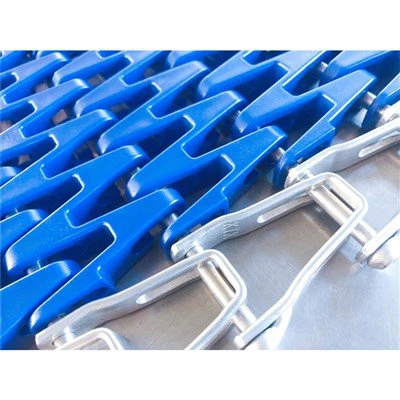
Features of Hybrid Spiral Mesh Belt: 1. Combine the advantage of stainless-steel mesh belt and plastic belt. 2. Easy assemble and easy disassemble plastic module. 3. The driven system is all the same
Add to Inquiry -
One Direction Belt With Welded Edge
One Direction Belt means spirals wound in the same direction are arranged. Advantages 1. The cost of this mesh belt is relatively cheap. 2. The weight of this mesh belt is relatively light. 3. By
Add to Inquiry -
Features of Direct Drive Spiral Mesh Belt The header on both edge of the belt is longer than standard spiral belt and the header is integrated forming by the rod. It’s a kind of direct drive instead
Add to Inquiry -
Curve Flat Wire Belt is arranged in the form of lattice and jointed with the straight rods. The edge can be button head welded or clinched.
Add to Inquiry -
Spiral Mesh Belt for Rows Link
Spiral Mesh Belt for Rows Link, SR type is a combination of spiral mesh,unique link and straight rod. Spiral Mesh Belt for Small Radius Four Rows Link, or Three, Five Rows Link is optional.
Add to Inquiry -
Spiral Mesh Belt For Small Radius Three Rows Link
Spiral Mesh Belt for Small Radius, SR type is a combination of spiral mesh,unique link and straight rod. Spiral Mesh Belt for Small Radius Three Rows Link is a typical structure, 4 or even 5 rows
Add to Inquiry -
Flat Wire Belt with Clinched Edge
Flat Wire Belt with Clinched Edge is arranged in the form of lattice and jointed with the straight rods.
Add to Inquiry -
Balanced Flat Wire Mesh Belt, KF2 means the left and right spirals are alternately arranged and jointed with the pre-crimped rods. The edge is commonly welded or with chain. The spiral is made of
Add to Inquiry -
Double Balanced Weave Mesh Belt
Double Balanced Weave Mesh Belt, K2W, uses the K2 type spiral (double) with pre-crimped rods to joint.
Add to Inquiry -
Double Compound Balanced Mesh Belt
Double Compound Balanced Mesh Belt includes A2W and F2W. A2W uses A2 type spiral (double) with straight rods to joint while F2W uses F2 type.
Add to Inquiry



Why Choose US
Our Factory
Kansai Wire Netting(Kunshan)Co., Ltd, as a subsidiary of Kansai Wire Netting from Japan, was founded in 2004, in Kunshan City, Jiangsu Province, PRC with total invested capital-USD 4.2 million co-operated by Kansai Wire Netting Co., Ltd(Japan) and JUN-EN Enterprise Corporation (Taiwan).
Our Product
Balanced Belt, Compound Balanced Belt, One Direction Belt, Chain Belt, Flat Wire Belt, Ladder Belt, Curve Conveyor Belt, Special Process Belt, Plywood veneer Dryer Belt.
Freezing Food Machinery, Canned Food Machinery, Sea Food Machinery, Continuous Baking Machinery, Heat Treatment Machinery, Glass Machinery, Chemical Machinery, General Purpose Conveyors, Special Conveyors.
Main Market
With nearly 100 years developing history, Kansai group has sales or manufacturing operations in Japan, Taiwan, China, Thailand, Singapore,Australia and USA.
After-sales Service
In the operation and normal maintenance of mesh belt, we can provide customers with a wide range of reliable basis and advice. As an industrial wire mesh manufacturing arm of the Nippon Filcon group, we will ensure to meet our new challenges by responding to each customer requirement with the Timely, Correctly and Honestly commitment we are renowned for.
Types of Wire Mesh Metal Conveyor Belt




The term wire mesh conveyor belt is an all-encompassing term that covers several types of weavings, patterns, structures, and configurations of wire mesh belts. The flexibility and construction of wire mesh conveyor belts makes them adaptable to a wide range of uses since their patterns can vary from tightly woven belts to ones that are loosely woven with each type of weave or pattern being used for a specific purpose or set of requirements.
Compound Balanced Conveyor Belts - Compound balanced conveyor belts have left and right-hand spirals that are compounded together to make a tightly woven flat conveying surface. The tight weave prevents materials from falling through the openings in the weave. As with many of the various types of mesh conveyor belts, compound balanced weave conveyor belts are produced with a wide variety of weaves with each type following a basic pattern or structure.
The manufacture of compound balanced conveyor belts involves a set of precision steps that ensure the quality of the belt and the structure of its weave. Flipping the sections of the belt during production enhances the structure of the belt and ensures that it will track properly. If a compound balanced conveyor belt is properly assembled, it should have variations in color between each of its sections, a factor that guarantees the quality of the weave and the belt.
Balanced Metal Weave Conveyor Belt - Balanced metal weave conveyor belts have right and left-hand spirals that are joined by a crimped connector for each spiral row. The edges of the belt are welded and are available in a limitless number of mesh choices, which are dependent on the application for which the belt will be used. Although balanced metal weave conveyor belts may seem similar to compound balanced weave conveyor belts, the weave of balanced metal weave conveyor belts is less dense, a factor that will allow small pieces to fall through the belt.
The choices of types of balanced metal weave conveyor belts includes the number of spirals per foot, the gauge of connector wires, spiral wire gauge, and second connectors per foot. To further meet the specific needs of an application, spiral pitch and various belt widths are available with pitches ranging from 12 up to 144 and widths of pitches ranging from 3 in up to 0.25 in. Gauges of wire for balanced metal weave conveyor belts range from 1 up to 144 with custom connectors and spirals available on demand.
Gratex Metal Conveyor Belt - Gratex metal conveyor belts have very closely wound spirals connected with a straight metal rod. They have a semi closed mesh, which makes them capable of transporting very small parts. Gratex metal conveyor belts are a compromise between compound metal conveyor belts and balanced metal conveyor belts in that they are woven like balanced conveyor belts but not as loose and more like compound balanced conveyor belts.
The metal rod connector of gratex metal conveyor belts provides stronger connection between the weaves of the mesh, which produces the semi closed structure. It is this factor that makes gratex metal conveyor belts capable of carrying smaller parts and heavier loads.
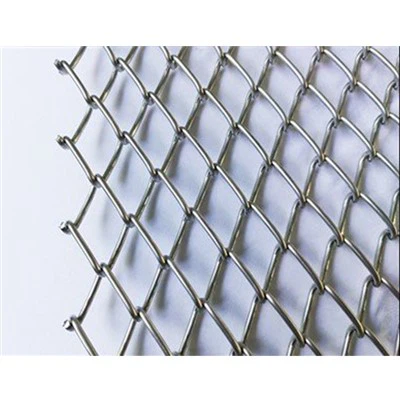
Chain Link Metal Conveyor Belt - Chain link metal conveyor belts have a simple design that features spiral coils interwoven to create a wire mesh that has knuckle or welded edges. The successive interwoven spiral wires have the appearance of a chain linked fence. The design of chain link metal conveyor belts makes them economical and ideal for lightweight conveying applications.
The three types of chain link metal conveyor belts are standard, reinforced, and double reinforced. Standard chain link conveyor belts have large open areas that allow for easy air flow for heating, cooling, and drying applications. Reinforced chain link metal conveyor belts are sturdier, have less open space, and are built for more rugged applications. Of the three types, double reinforced chain link metal conveyor belts have extremely small openings for superior strength and durability.
How to Choose a Stainless Steel Conveyor Belt
Food grade modular belt food conveyor
Modular conveyors, like these, boast a hygienic design and are used widely throughout all sectors of the food industry, including meat, poultry, ready meals, salads and baked goods. The great thing about the stainless steel conveyor is that it requires very little maintenance, and the length and width can be adjusted to suit your requirements. What's more, replacing the belt is quick and easy.
Cone de-boning conveyor
Make things easier for yourself when cutting and filleting chicken and other non-uniform carcasses with one of our bespoke cone de-boning conveyors. All our systems are made from stainless steel and have a speed controller to enable you to adjust the speed at which the belt operates. Depending on your requirements, we can manufacture a conveyor belt that is long enough for workers to de-bone poultry products comfortably (without impeding each other's space), whilst adhering to social distancing guidelines.
Sandwich assembly conveyor
From balancing fillings and slicing them down to size to strategically layering them and cutting, what's the secret to making the perfect butty? The simple answer is a stainless steel conveyor belt. We supply sandwich assembly conveyors that transport your ingredients across the assembly line - making sure that everything is exactly where it needs to be. Extras, such as cutting tables, packaging tables, trays and shelves, can also be added to the system - getting your sandwich assembly line moving.
Sanitising conveyor
If you're looking to eliminate contamination, our sanitising conveyors tick the right box. Constructed from stainless steel, they convey materials along a belt and spray a sanitising solution directly onto products, ensuring they are fully-sanitised. In doing so, the risk of human error - associated with hand spray procedures, conventional sanitising tunnels and dip tanks - is minimised.
Rotary turntable
Bespoke rotary turntables aid food distribution and are ideal for end of conveyor line sortation and feeding. Adding a turntable to your packaging station will speed up the production process and, in turn, save you valuable time and money. As with all our stainless steel conveyors, these comply with strict food industry hygiene guidelines and are easy to wipe down.

Series 304 and series 316 stainless steels are most commonly used for the manufacture of metal conveyor belts due to their corrosion resistance and their ability to endure variations in heat. Since many metal conveyor belts are used by the food industry, stainless steel is the ideal metal because of its impenetrable hygienic clean surface and exceptional durability.
Stainless steel conveyor belts come in several forms including flat wire open structure for drainage and air circulation. The many forms of stainless steel conveyor belts include mesh, chain rod, flat wire, and balanced weave. For certain special applications where a non-stick surface is necessary, stainless steel can be coated with Teflon or another form of coating. The workability of stainless steel makes it possible to weave it into any form or pattern including reinforced and knitted.
Application of Stainless Steel Conveyor Belt
Bread Production Metal conveyor belts
Bread Production Metal conveyor belts are commonly used in bread production facilities to transport dough through the different stages of the baking process. From the mixing stage to the proofing stage and then on to the oven, metal conveyor belts ensure that the dough moves smoothly and efficiently through each stage. The belts can be customized to suit the specific requirements of the bakery, such as the width, length, and material of the belt.
Cake Production Metal conveyor belts
Cake Production Metal conveyor belts are also used in cake production facilities to transport cakes through the various stages of the baking process. The belts are specially designed to prevent the cakes from sticking to the belt or being damaged during transportation. They are also easy to clean, which is essential in a bakery setting where hygiene is crucial.
Chocolate production facilities
Chocolate production facilities also use metal conveyor belts to transport chocolate products through the production process. The belts must be able to withstand the high temperatures required for melting and tempering chocolate, as well as the weight of the products being transported. The belts are often made from stainless steel, which is highly resistant to corrosion and can be easily cleaned.
Biscuit production facilities
Biscuit production facilities metal conveyor belts are used to transport biscuits through the various stages of production. The belts must be able to handle the weight of the biscuits and be designed in such a way that the biscuits do not stick to the belt. Metal conveyor belts are also used in the packaging process to transport biscuits to the packaging area.
Snack production facilities
Snack production facilities use metal conveyor belts to transport a wide range of products, from potato chips to pretzels. The belts must be able to handle the weight of the products and be designed in such a way that the products do not stick to the belt. Metal conveyor belts are also used in the packaging process to transport snacks to the packaging area.
Pastry production facilities
Pastry production facilities also use metal conveyor belts to transport pastry products through the various stages of production. The belts must be able to handle the weight of the products and be designed in such a way that the products do not stick to the belt. Metal conveyor belts are also used in the packaging process to transport pastries to the packaging area.
Cleaning and sanitation
Cleaning and sanitation are critical in a bakery facility to prevent the contamination of products. Metal conveyor belts are easy to clean and sanitize, making them ideal for use in a bakery setting. They can be easily disassembled for cleaning and then reassembled once they have been sanitiz
How to Extend the Lifespan of Your Metal Belt Conveyor
Things to consider before installing the conveyor
The surprising difference between the conventional conveyor belts and metal belts is the ratio between belt thickness and pulley diameter that you need to maintain. While the metal belts are usually made of stainless steel, pulleys are made from stainless steel, plastic or aluminum, depending on the design specifications. The majority of belt pulleys is i-beam, capped tube or round stock and can be designed with drive lug timing pockets, conventional timing teeth, relief channels or ball bearing timing teeth. In order for the metal belts to function well, it is important that you use the largest pulley diameter in relation to the thickness of the belt.
Avoid reverse bends in metal belts not unless it is badly needed since it can affect the lifespan of the belts. Minimize pulleys as much as possible in the conveyor system to reduce unnecessary stress on the belt.
Proper handling
Although metal belts are highly resistant to chemical corrosion, physical damage and temperature, proper handling during installation are required, especially for thinner metal belts. Improper handling might result to damage at the welded part and edges of the belt during installation and maintenance.
Tension
Another factor that may affect the lifespan of the belt is tension. The belt tension should be maintained as low as possible to extend belt lifespan and minimize wear on the system. One of the common reasons why the frame warps or fractures the belt is because of high tension.
Maintain cleanliness
The metal belt conveyor systems should be made with easy access on the other side of the system. Having easy access to the inner parts of the metal belt conveyor minimizes downtime during sanitization and maintenance. To avoid excessive damage to the belt, the exterior and interior diameter of the belt should be free of debris.
FAQ
Q: How do I maintain a Stainless Steel Conveyor Belt?
Inspection: Regularly inspect for signs of wear, damage, or misalignment.
Lubrication: Lubricate the moving parts as required to reduce friction and wear.
Tension Adjustment: Ensure the belt is properly tensioned to avoid slippage or damage.
Q: Can Stainless Steel Conveyor Belts be customized?
Q: Are Stainless Steel Conveyor Belts suitable for high-temperature applications?
Q: Which metal is used in conveyor belt?
Q: What is steel belt conveyor?
Q: What is the application of metal conveyor belt?
Q: What is steel cord conveyor belt?
Q: What does a conveyor belt consist of?
Q: How to do maintenance on conveyor belt?
Lubricate roller bearings.
Scrape parts of the conveyor mechanism to remove debris and foreign objects.
Check for damages to conveyor belt and rollers.
Check whether materials are unloading properly from the conveyor mechanism.
Q: How do you clean a metal conveyor belt?
We're well-known as one of the leading stainless steel conveyor belt manufacturers and suppliers in China. If you're going to buy high quality stainless steel conveyor belt for sale, welcome to get quotation from our factory. Also, customized service is available.
