
Ladder Mesh Belt: Avoid 4 Pitfalls To Prevent Wire Breakage | Kansai Wire Netting Technology(Kunshan)
Oct 13, 2026
Ladder mesh belts are the lifeline of continuous fried food production lines. Local wire breakage or twisting deformation may jam products and contaminate oil. Worse still, unplanned full-line shutdowns can cost thousands per hour. In fact, 90% of premature belt failures stem from poor selection and operational mistakes. This article outlines four typical pitfalls and practical solutions.
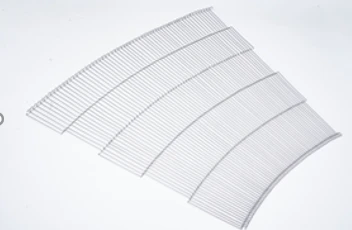
Wrong Material Choice: Risks of Budget SUS304 Ladder Mesh Belt for Fried Food Production
SUS304 is the standard material for ladder belts. However, cheap alternatives marketed as 304 often suffer severe oxidative brittle fracture within just three months. Genuine food-grade SUS304 contains ≥8% nickel and 18–20% chromium. Many budget belts substitute 201 stainless steel, which quickly peels and weakens under high heat. Even with SUS304, different wire tensile strengths affect service life.
KTK's Recommendations:
1. Request spectrum analysis material certificates.
2. Use standard SUS304 for frying below 180°C; choose 316L for high-salt seafood and pickled products.
3. Our belts include full material traceability from steel mill to finished goods.
4. Share operating conditions to match suitable material and tensile strength.
Manufacturing Microcracks: The Hidden Cause of Early Wire Breakage on Ladder Mesh Belts
New belts may break within a month, with clean transverse cracks on spiral or curved sections. During coiling, tiny microcracks form on wire surfaces. Repeated bending fatigue enlarges these flaws and causes fracture.
KTK's Recommendations:
Select suppliers with strict quality control to minimise harmful indentations.
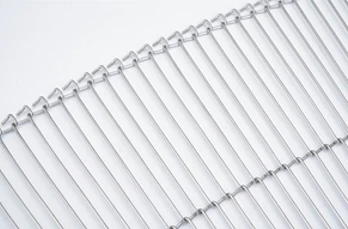
Ladder Mesh Belt Load Rating: Do Not Estimate Conveyor Load Based Only on Belt Width
Identical belts may last 2 years for one user yet stretch severely in 6 months for another. Conveyor speed, belt width and length all change load limits. Many buyers only check width while ignoring load per square metre. For standard 19mm-pitch flat flex belts: 1.2mm wire (≤5kg/m² for light snacks); 1.6mm wire (≤10kg/m² for chicken/fish fillets); 2.0mm wire (≤20kg/m² for heavy pre-fried battered products).
Putting into service without Pre-Installation Inspection - dimensional deviation creates risks of offset.
New belts keep tracking off-centre even after roller adjustment. The root cause lies in excessive cumulative tolerance on width and pitch, mismatching your equipment sprockets.
KTK's Recommendations:
Supply drawings or old belt samples for 1:1 custom manufacturing. Inspection reports are available pre-shipment, and onsite checks are welcome.